Import olive oil from Syria 2026 | Adam Zaytoona
In 2026, many importers and wholesalers are looking for reliable sources of Syrian olive oil due to Syria’s long history of olive cultivation and olive oil production, as well as the distinctive characteristics of Mediterranean olive oil.
For businesses, however, choosing an olive oil supplier is not based on the country of origin alone. Product quality, laboratory analysis, packaging options, available quantities, private label services, shipping solutions, and supply reliability are all important factors.
This guide highlights the key points importers should consider when importing olive oil from Syria in 2026, including quality, packaging, bulk supply, and land and sea shipping options.
Why Import Olive Oil from Syria?
Syria has a long-established tradition of olive cultivation and olive oil production, particularly in regions known for olive farming in northern and western Syria. Syrian olive oil can offer distinctive Mediterranean characteristics and can be supplied in different quality grades and packaging formats suitable for wholesalers, distributors, retailers, restaurants, and food companies. Adam Zaytoona has extensive experience in the olive oil sector, with historical roots in olive oil trading in Syria and further development into manufacturing, bottling, and exporting from Turkey. The company works with olive oil from Syria and other Mediterranean origins according to its quality requirements, allowing importers to access different sourcing and supply options.
Syrian Olive Oil Quality Compared with Other Origins
When comparing Syrian olive oil with olive oils from Spain, Italy, Greece, Turkey, or Tunisia, quality should not be judged by country of origin alone.
Olive oil quality depends on several important factors, including:
- Olive variety.
- Harvest timing.
- Quality of the olives.
- Time between harvesting and milling.
- Extraction method.
- Storage conditions.
- Processing temperature.
- Packaging.
- Storage period.
- Chemical and sensory analysis.
High-quality Syrian olive oil can therefore compete with olive oils from other Mediterranean countries when it is properly produced, stored, tested, and packaged according to the required specifications.
Extra Virgin Olive Oil
Importers looking for Syrian Extra Virgin Olive Oil should verify the actual specifications of the product through laboratory analysis and a Certificate of Analysis (COA). Extra Virgin Olive Oil must meet the applicable chemical and sensory requirements of the relevant standards. Free acidity is one of the important quality parameters, with a maximum of 0.8% under the IOC commercial standard. For this reason, purchasing Extra Virgin Olive Oil should not be based only on the product name or label. Importers should review the laboratory results and technical specifications before placing a commercial order.
What Should Importers Request from a Syrian Olive Oil Supplier?
Before placing a commercial order, importers should request a complete product and shipment specification.
Important information includes:
- Olive oil type.
- Country of origin.
- Quality grade.
- Free acidity.
- Peroxide value.
- Required laboratory tests.
- Technical specifications.
- Certificate of Analysis (COA).
- Packaging type.
- Net and gross weight.
- Bottles or units per carton.
- Cartons per container.
- Minimum order quantity.
- Payment terms.
- Loading port.
- Destination port.
- Incoterms.
- Production and shipping lead time.
This information allows companies to compare suppliers based on the complete commercial offer rather than simply comparing the price per ton.
Syrian Olive Oil Packaging Options for Businesses
The most suitable packaging depends on the target market and the importer’s business model.
Adam Zaytoona offers different olive oil packaging solutions, including plastic bottles, glass bottles, metal tins, as well as bulk solutions such as Flexi Tank and IBC Tank.
Olive Oil in Plastic Bottles
Plastic bottles are suitable for retail and wholesale markets, particularly where practical, lightweight, and easy-to-handle packaging is required.
Available sizes can include 250 ml, 500 ml, 1 liter, 2 liters, 3 liters, 4 liters, and 5 liters, depending on the product and customer requirements.
This packaging format is suitable for:
- Supermarkets.
- Food retailers.
- Wholesalers.
- Distributors.
- Restaurants.
- Private label brands.
Olive Oil in Glass Bottles
Glass bottles are particularly suitable for products targeting premium consumers and higher-value retail segments. Available sizes can include 250 ml, 500 ml, 750 ml, and 1 liter, depending on customer requirements.
Glass packaging can be an attractive option for launching a Premium Olive Oil Brand or a private label product targeting premium markets.
Olive Oil in Metal Tins
Metal tins are widely used in Middle Eastern and Gulf markets, particularly for larger package sizes.
Available formats can include:
- 2 liters.
- 4 liters.
- 5 liters.
- 10 liters.
- 16 liters.
These larger formats can be suitable for households, restaurants, wholesalers, distributors, and foodservice businesses.
Private Label Olive Oil
Private Label Olive Oil is an important option for companies that want to sell olive oil under their own brand. Instead of importing an existing branded product, the importer can work with a manufacturer to develop a product according to its own brand identity and market requirements.
Depending on the agreement, private label production can include:
- Brand name.
- Label design.
- Bottle or tin size.
- Packaging type.
- Carton design.
- Product specifications.
- Importer information.
- Target market requirements.
This model is particularly suitable for importers, wholesalers, supermarkets, distributors, restaurants, and food companies.
Bulk Olive Oil from Syria
For companies that have their own bottling or filling facilities, importing Bulk Olive Oil can be more suitable than importing finished retail packages. Bulk olive oil can be transported using solutions such as Flexi Tank and IBC Tank.
Flexi Tank
Flexi Tanks are designed for transporting large quantities of olive oil inside standard shipping containers. They are suitable for manufacturers, bottling companies, and distributors that want to receive bulk olive oil and handle the bottling process locally. Adam Zaytoona can provide Flexi Tank solutions according to the required quantity and shipment specifications.
IBC Tank
IBC Tanks are another option for bulk olive oil transportation. They can provide greater flexibility for companies that need to handle different quantities or distribute the product between different facilities and customers.
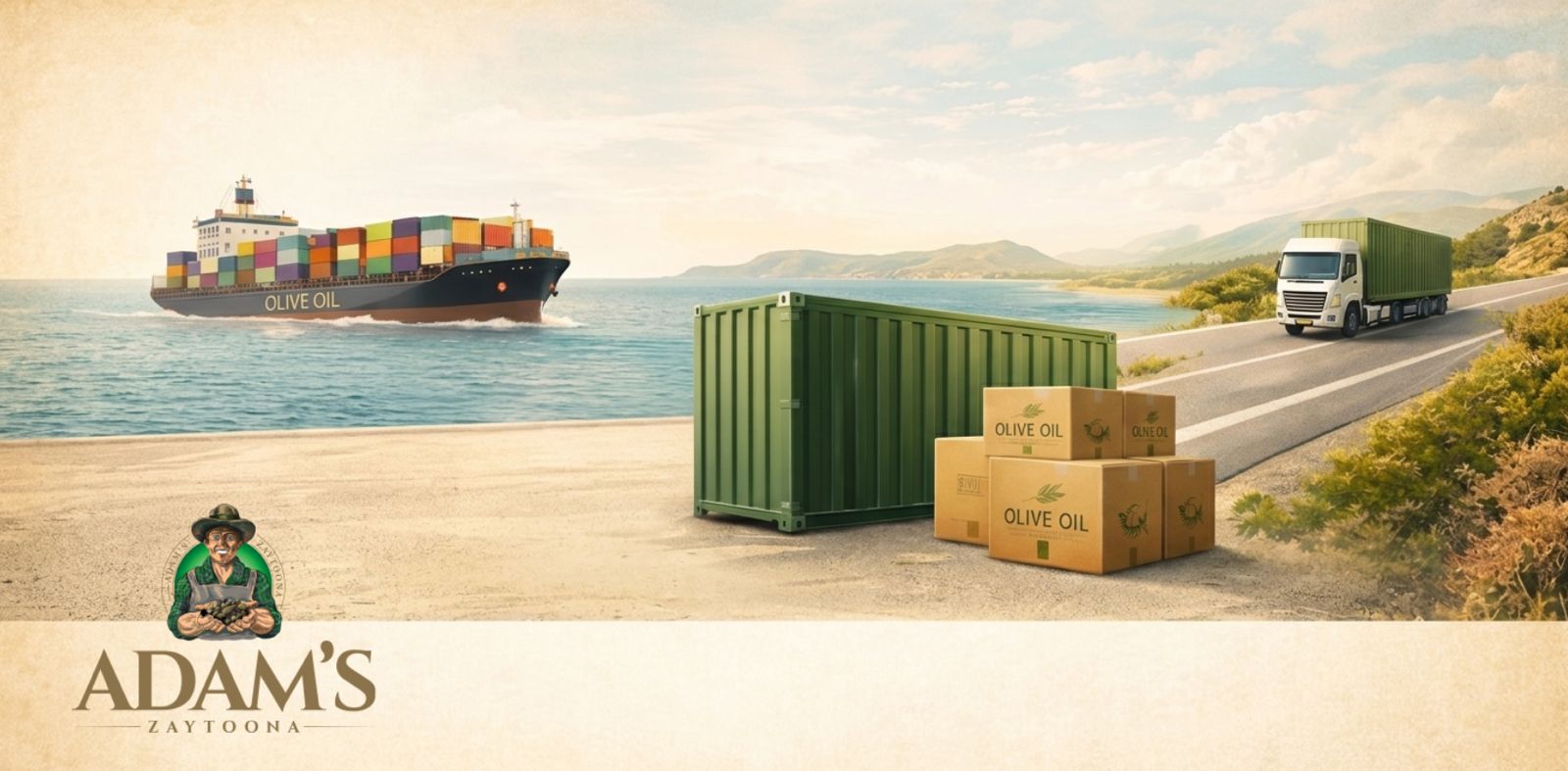
Land Shipping from Syria
Land transportation is an important option for importing olive oil from Syria into nearby markets that can be reached by road.
Key advantages include:
- Flexibility in shipment size.
- Delivery to the customer's warehouse.
- Suitable for small and medium-sized shipments.
- Flexible truck and container options.
- Suitable for geographically close markets.
Before arranging a shipment, importers should verify available border crossings, customs documentation, import regulations, and destination-country requirements.
Sea Shipping for Syrian Olive Oil
For large commercial quantities and distant markets, sea freight is one of the main transportation solutions. Olive oil can be shipped in different formats, including:
- PET bottles.
- Glass bottles.
- Metal tins.
- Full container loads.
- Flexi Tank.
- IBC Tank.
The most suitable shipping method depends on the product format, shipment quantity, destination, and required delivery schedule.
Land Shipping or Sea Shipping: Which Is Better?
The best option depends on the destination country, order quantity, budget, and required delivery time.
Land Shipping Is Suitable When:
- The destination country is geographically close.
- The shipment is small or medium-sized.
- The importer needs greater delivery flexibility.
- Direct delivery is important.
Sea Shipping Is Suitable When:
- The shipment quantity is large.
- The destination is far away.
- A full container is being imported.
- Bulk olive oil is being imported.
- The goal is to reduce transportation cost per unit.
For this reason, importers should evaluate the total landed cost rather than focusing only on the price of the olive oil.
Importing Syrian Olive Oil into Gulf Markets
The Gulf region is an important market for food products and edible oils. Importers can consider different formats depending on their target customers and distribution channels, including:
- 500 ml bottles.
- 1 liter bottles.
- 2 liter bottles.
- 3, 4, and 5 liter formats.
- Large metal tins.
- Private Label Olive Oil.
- Bulk Olive Oil.
- Flexi Tank.
Why Choose Adam Zaytoona for Olive Oil Imports?
Adam Zaytoona combines long-standing experience in olive oil trading with modern manufacturing, bottling, and export capabilities. The company has historical roots in olive oil trading in Syria and has expanded its operations into manufacturing and bottling in Turkey, including facilities in Mersin Free Zone and laboratory capabilities for monitoring and analyzing olive oil. Adam Zaytoona provides business solutions including:
- Extra Virgin Olive Oil.
- Virgin Olive Oil.
- Bulk Olive Oil.
- Private Label Olive Oil.
- Plastic packaging.
- Glass packaging.
- Metal tin packaging.
- Flexi Tank.
- IBC Tank.
- Sea freight solutions.
- Land transportation solutions.
Importers can request a customized commercial quotation based on the olive oil type, quantity, packaging format, destination country, destination port, and required Incoterm.
